Management system for learning centres
 Edufy
A management system for learning centres and private schools: students, timetable, attendance, payments and contracts. I build the backend, the web apps and the mobile apps myself.
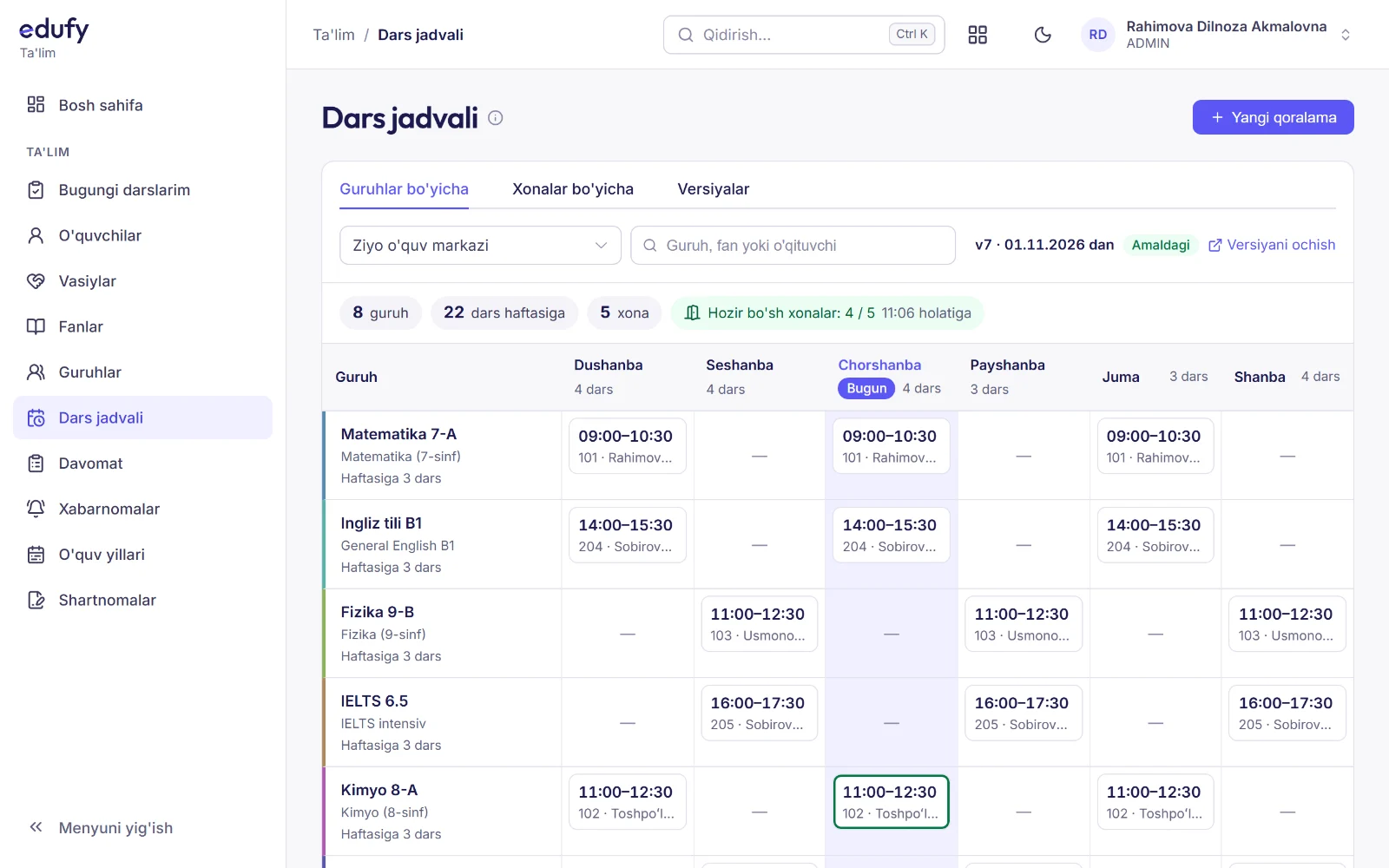
- Period
- 2026 — Now
- Role
- Backend, web and mobile
- Module apps
- 8
- Backend tests
- 3000+
My contribution
- 01
A modular monolith: .NET 10, Clean Architecture and CQRS, with each module in its own PostgreSQL schema.
- 02
Learning centres and private schools on one core: groups and courses, or classes, terms and a gradebook.
- 03
Timetable: a draft and approved versions, with clashes found by teacher and by room.
- 04
Attendance and Telegram messages to guardians; a parent cabinet and a mobile app.
- 05
Finance: monthly billing, payments, receipts and contracts that can be checked by QR code.
- 06
Web (Vue 3): eight module apps from one codebase; mobile apps in React Native.
Stack
- C#
- .NET 10
- ASP.NET Core
- EF Core
- PostgreSQL
- Redis
- Keycloak
- Vue 3
- TypeScript
- React Native
- Docker
(03) — Product
A centre’s daily work in one system.
Edufy is a management system for learning centres and private schools: students and guardians, groups, the timetable, attendance, payments, receipts and contracts. It runs in the browser and keeps several branches inside one organisation.
I am building it on my own: the backend, the web apps, the mobile apps and the site.
(04) — Timetable
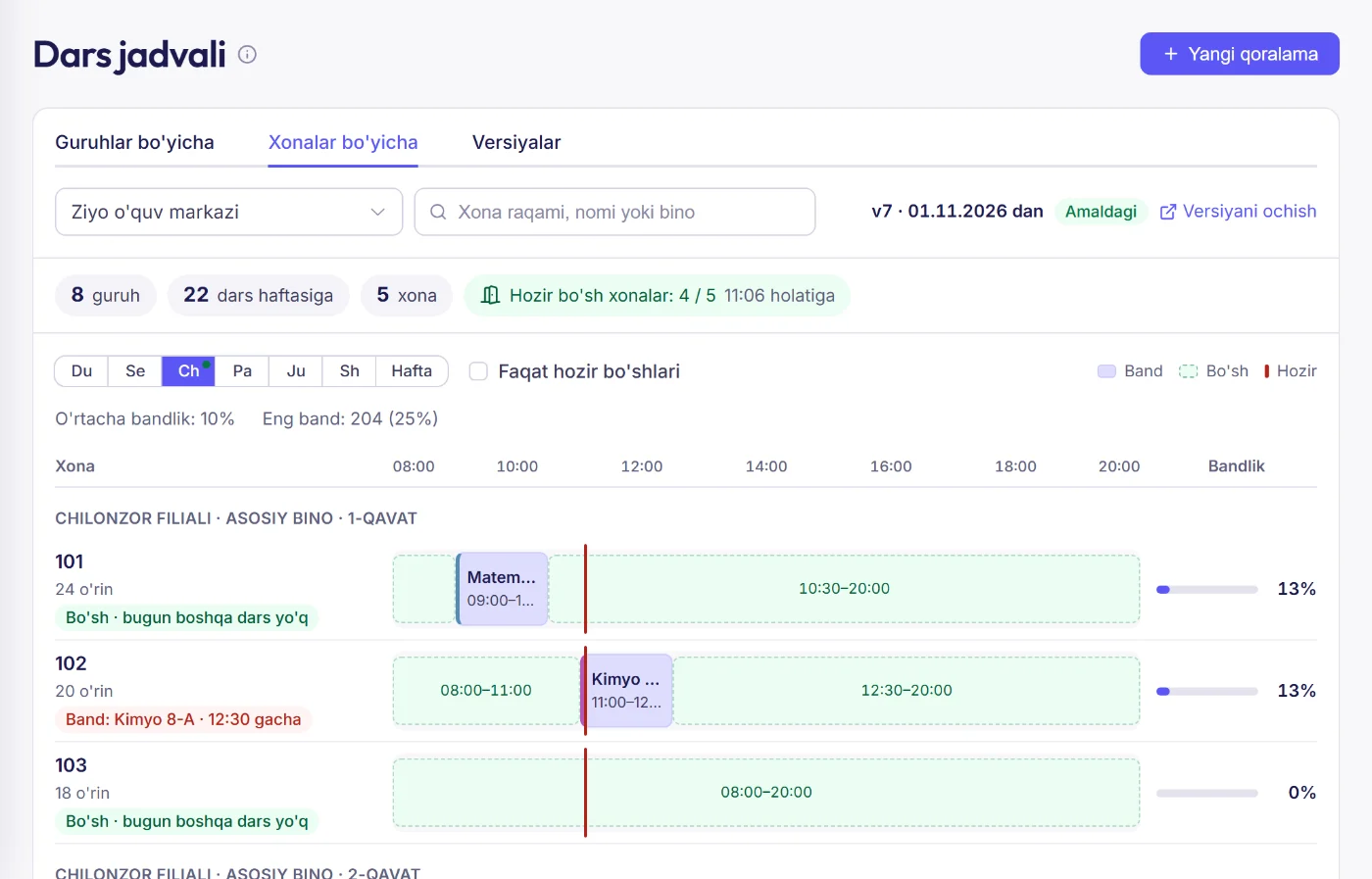
A timetable without clashes.
The timetable is kept in versions: one draft and immutable approved versions, each with the date it takes effect. Clashes are not stored but worked out on every read: a teacher or a room booked twice at the same time shows up at once. So does a teacher who is busy at another centre — without revealing where.
(05) — Attendance
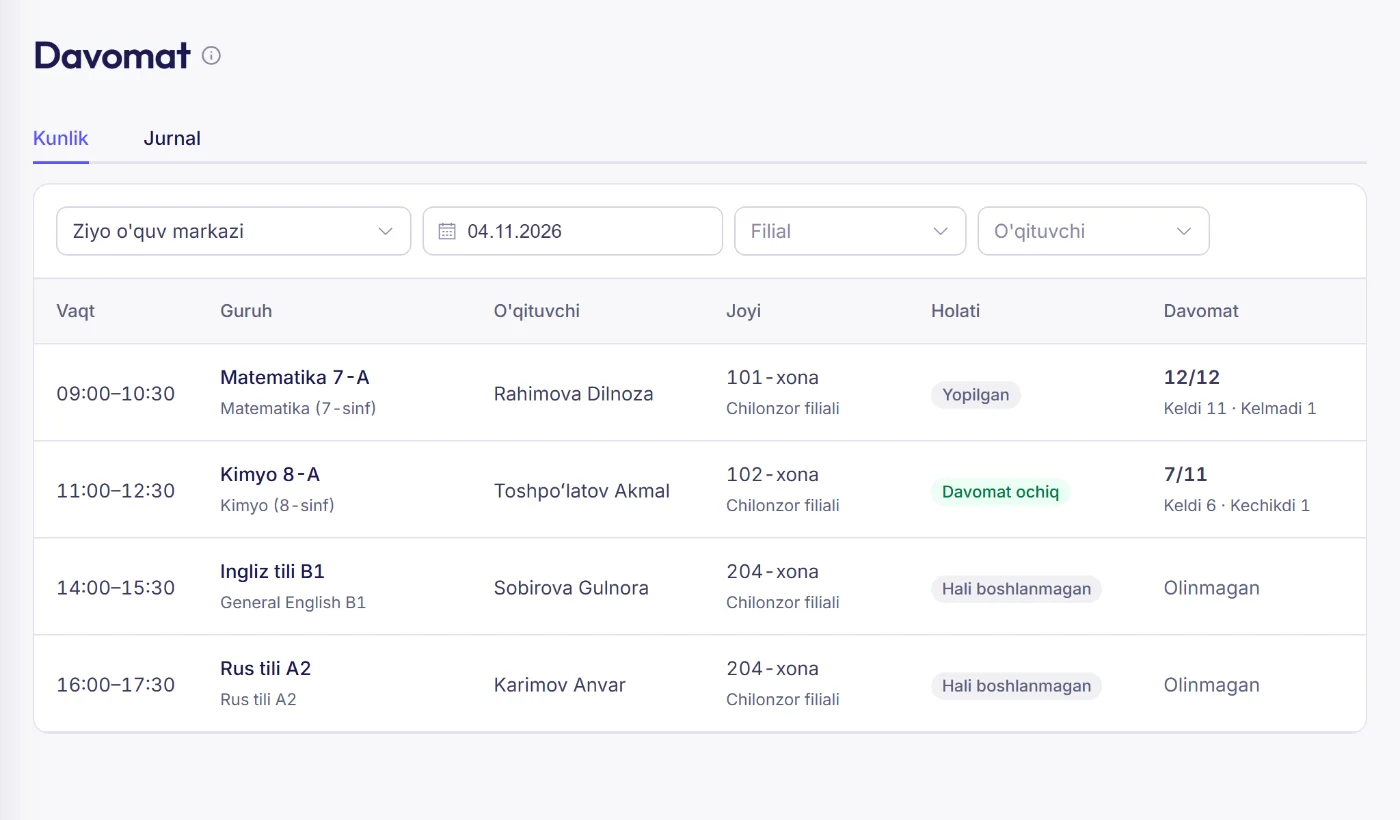
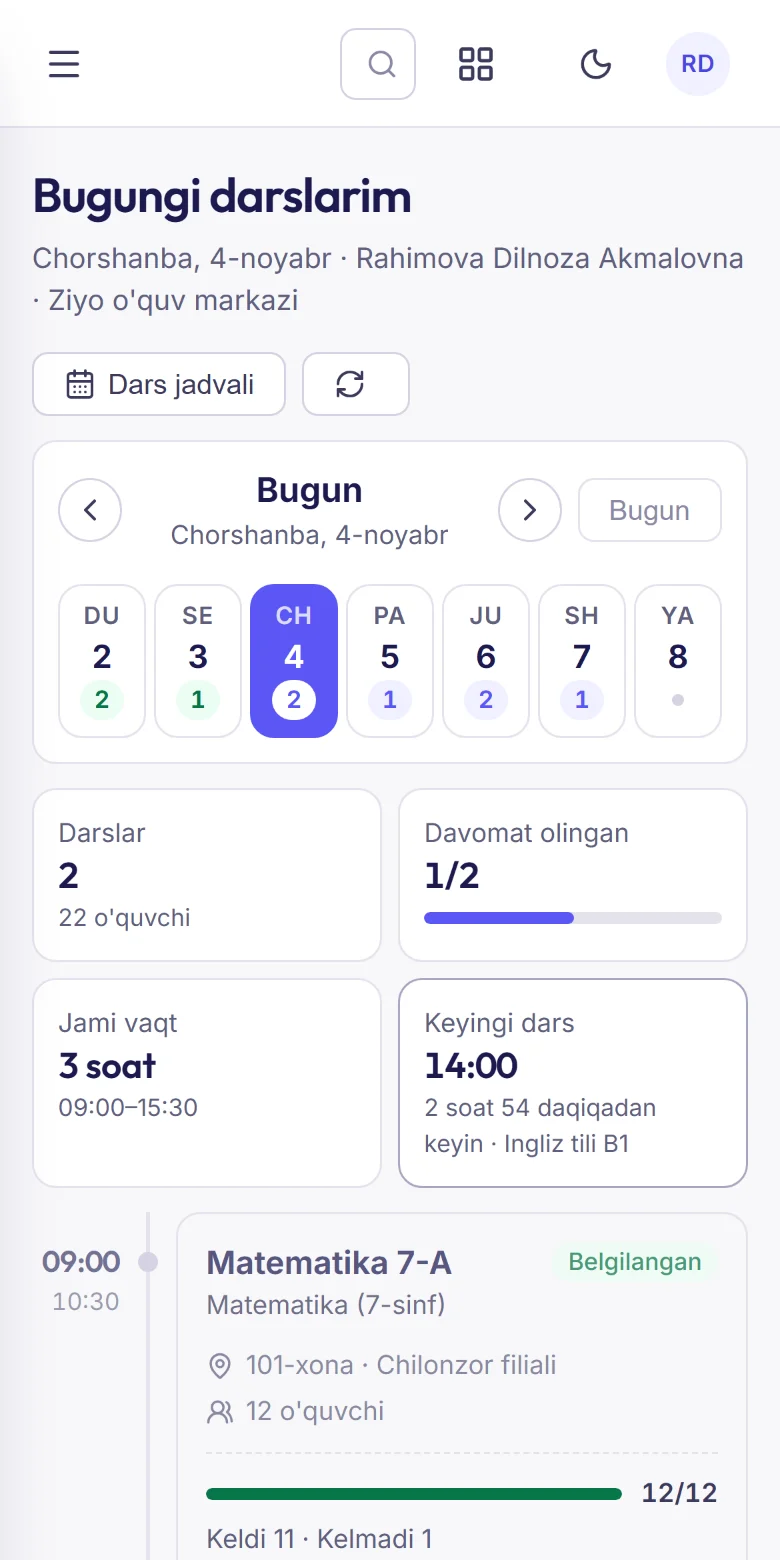
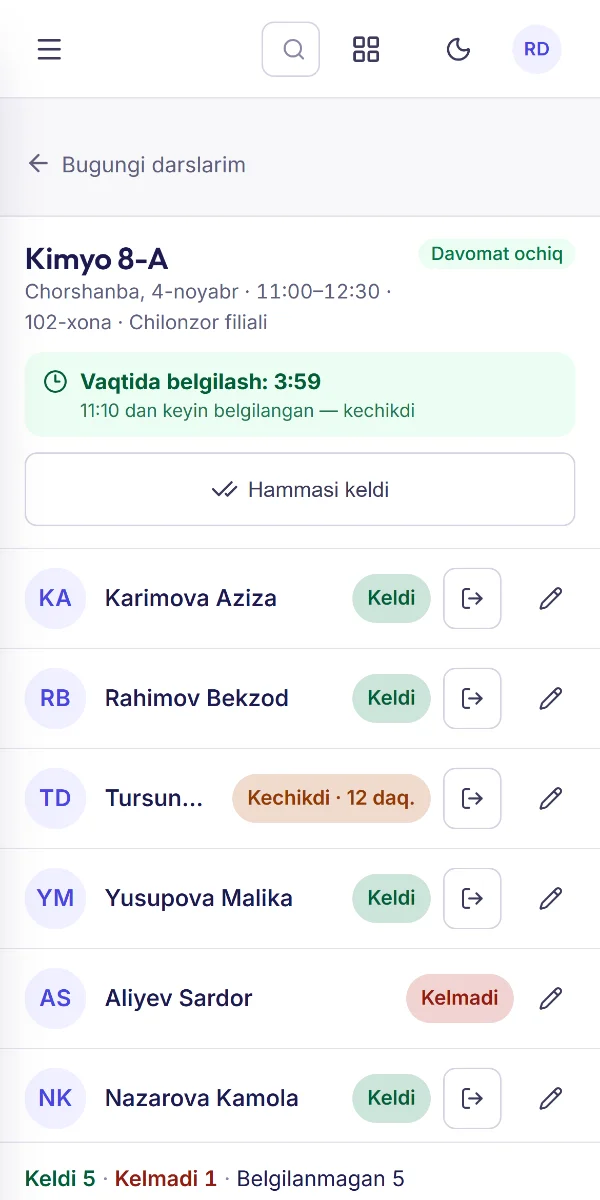
Attendance from the teacher’s phone.
The teacher opens today’s lessons and marks the students, and the time of each mark is taken from the server clock. The Telegram message to the guardian is queued in the same transaction, so there is never a mark without its message. An “absent” mark waits two minutes, giving the teacher time to undo a slip.
(06) — Finance
Every sum accounted for.
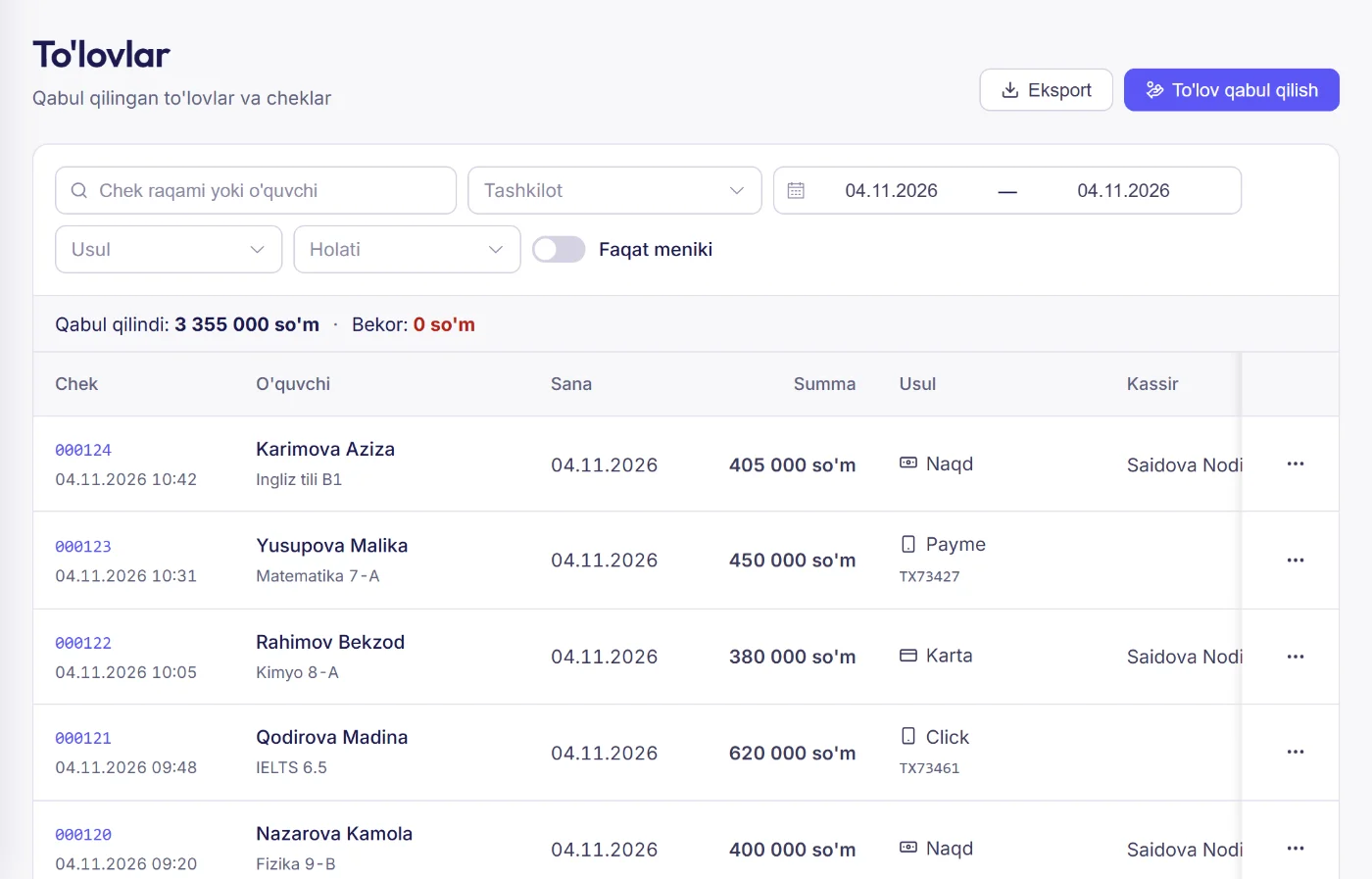
Monthly tuition is charged in advance from the day the centre has chosen; when a student joins mid-month, is frozen or leaves, it is recalculated by the number of lessons on the timetable. The account is kept as a ledger of immutable entries, and the balance is simply their sum.
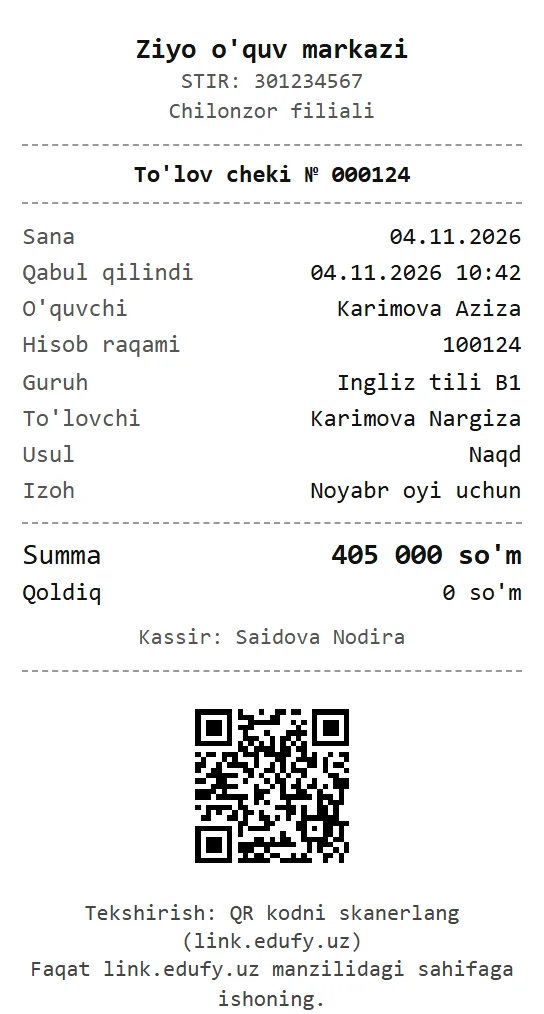
The QR code on a receipt or a contract confirms that the document is genuine. A contract also asks for a PIN, and personal data is shown masked.
(07) — Schools
The same core for schools.
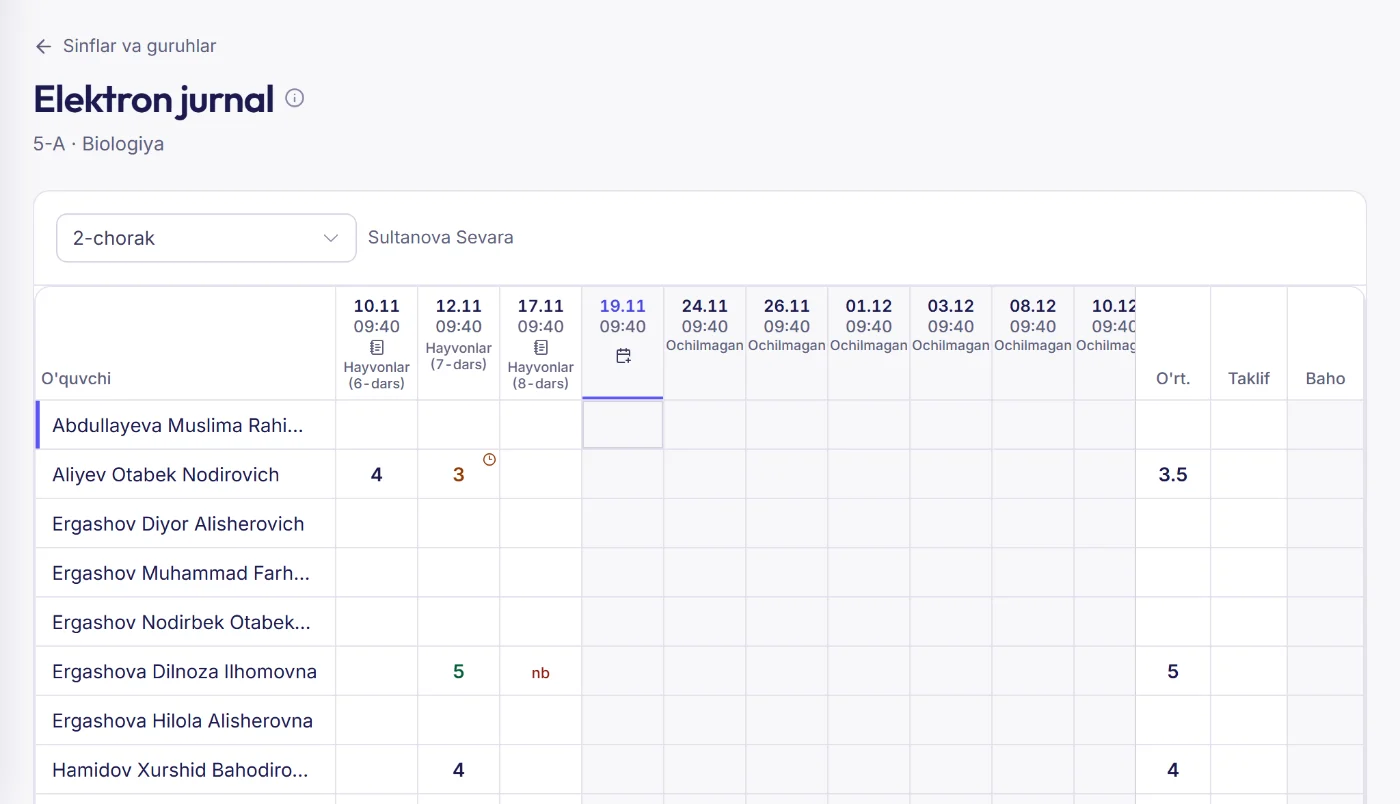
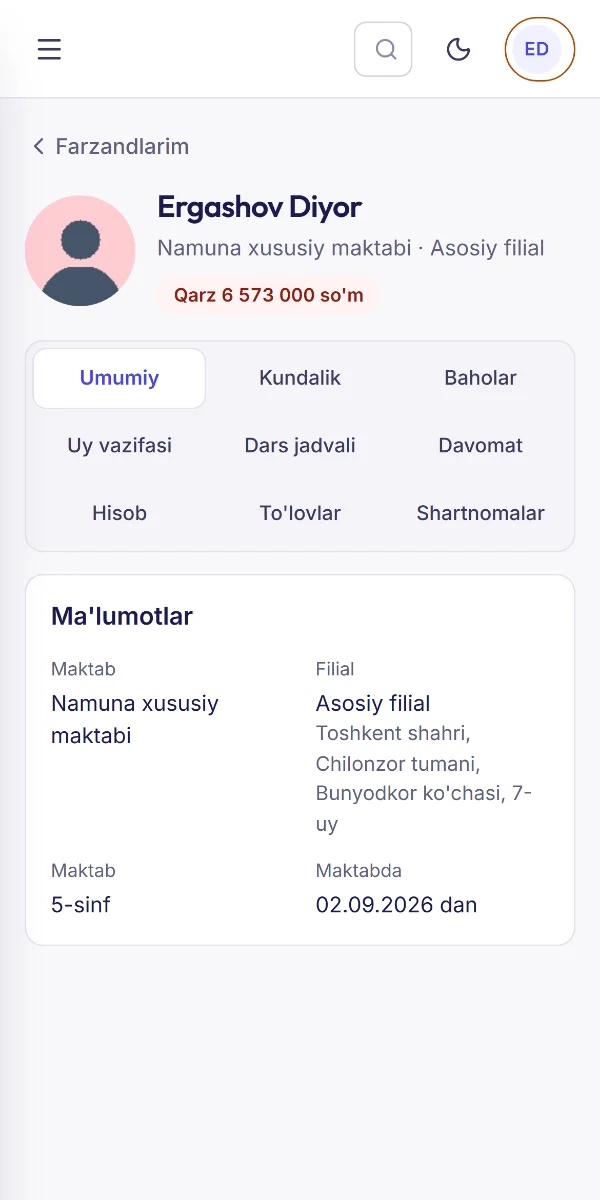
For a private school, classes, a curriculum and terms are switched on in place of courses and groups. The teaching side — lessons, timetable, attendance, gradebook — is separated from the commercial side, so both kinds of organisation run on the same code. The electronic gradebook, term grades and the parent app are built on that base.
(08) — Architecture
A modular monolith on one database.
The backend is a modular monolith in .NET 10, built on Clean Architecture and CQRS. Each module has its own schema in PostgreSQL, and web and mobile clients are served by separate API hosts.
Modules
Organisation, staff, teaching, finance, the parent cabinet, document checks and administration — each its own app over shared data.
Sign-in and permissions
Sign-in goes through Keycloak, with two-factor confirmation and passkeys. One login can work in several organisations, and access is set per section: see everything, only your own, or nothing.
Background work
Billing and message delivery run in in-process workers. A PostgreSQL advisory lock makes sure only one of them works at a time.
Web and mobile
The web is Vue 3 and TypeScript, with eight module apps built from one codebase. The mobile apps are written in React Native (Expo).
Quality
More than 3,000 backend tests. Architecture rules are tested too — for instance, that code never branches on the type of organisation.
Delivery
Docker and Traefik. GitHub Actions builds the images and runs the tests, and Jenkins ships them: automatically to staging, by hand to production.